OpenAI Launches Personal Finance Tools in ChatGPT Pro Preview
Breaking: OpenAI Introduces Personal Finance Features to ChatGPT Pro
OpenAI has begun rolling out personal finance capabilities within ChatGPT Pro, its premium subscription tier, marking a significant expansion into consumer financial technology. The features, currently available in preview to a limited group of U.S. users, allow the AI to assist with budgeting, investment questions, and expense tracking.
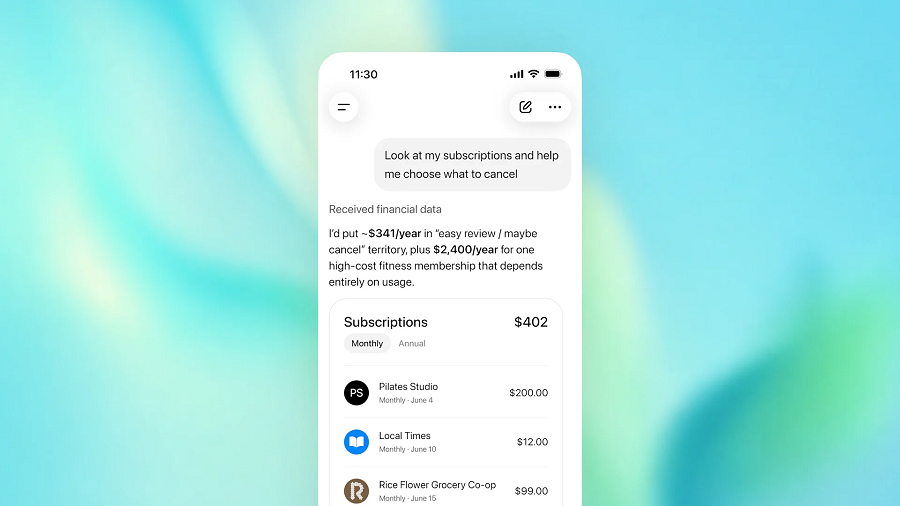
The company stated it will gather user feedback over the coming weeks to refine the tools before a wider release. A timeline for public availability has not been disclosed.
Expert Reactions
Financial technology analyst Sarah Chen of Aite-Novarica Group called the move "a logical step" for OpenAI. "By embedding financial advice directly into a conversational AI, they reduce friction for users who already trust the platform for productivity tasks," she said.
However, consumer advocate Mark Torres of the Digital Privacy Coalition warned about data risks. "Users should be cautious about sharing sensitive financial information with any AI system, even one as prominent as ChatGPT," he noted.
Background
ChatGPT Pro launched in early 2024 as a $200-per-month tier offering priority access, longer context windows, and advanced reasoning capabilities. The new personal finance features are among the first task-specific enhancements added to the subscription.
OpenAI has been gradually expanding ChatGPT's capabilities into domain-specific areas such as code generation and creative writing. The finance module represents a push into regulated advisory spaces, where AI must navigate compliance and accuracy challenges.

The preview is initially limited to a few thousand U.S. subscribers. OpenAI says it will expand the rollout based on feedback and safety testing.
What This Means
The introduction of personal finance tools signals OpenAI's ambition to compete with dedicated budgeting apps like Mint or YNAB, as well as with AI-driven financial assistants from banks. If successful, the feature could transform ChatGPT Pro from a general-purpose chatbot into a daily financial companion.
Industry observers caution that generative AI models are prone to hallucination, making them risky for critical financial decisions. OpenAI has implemented guardrails, including disclaimers and redirects to professional advisors for complex tax or legal matters, but the long-term effectiveness remains to be seen.
For users, the preview offers a glimpse of a future where AI manages not just schedules and emails, but also personal finances. The key question is whether consumers will trust an AI with their money—and whether OpenAI can deliver accuracy at scale.
Related Articles
- Beyond Model Accuracy: Why Inference Infrastructure Is the New AI Bottleneck
- New Privacy Proxy Shields Enterprise Data from AI Chatbot Exfiltration
- 10 Critical Software Supply Chain Threats Every Enterprise Must Face in 2025
- Googlebook: The Premium Android-Powered Laptop Challenging Apple and Microsoft
- Mastering AI Integration: A Python Developer's Guide to API-Driven Intelligence
- Ubuntu Set to Integrate On-Device AI Features in 2026, Canonical Emphasizes Principled Approach
- Enterprise Agent Orchestration: Microsoft and OpenAI Dominate, But Anthropic's Debut Signals a Shift in the AI Control Plane
- AI Agents with LLM 'Brains' Revolutionize Problem Solving: Experts Warn of Rapid Advances