Meta Announces Major Security Upgrades to End-to-End Encrypted Backups
Breaking: Meta Strengthens User Privacy with New Encryption Protocols
Meta has rolled out two significant security enhancements for its end-to-end encrypted backup system, making it even harder for anyone—including the company itself—to access user chat histories. The updates focus on over-the-air key distribution for Messenger and publishing cryptographic evidence of secure fleet deployments.
“These changes ensure that even Meta cannot decrypt your backed-up messages,” said a Meta security engineer familiar with the project. “The system is designed so that only the user holds the key.”
Background: The HSM-Based Backup Key Vault
Meta’s backup security relies on a geographically distributed fleet of Hardware Security Modules (HSMs). These tamper-resistant devices store recovery codes that are used to unlock encrypted backups for WhatsApp and Messenger. Neither Meta, cloud providers, nor third parties can access these codes.
“The vault uses majority-consensus replication across multiple data centers for resilience,” explains the Meta Security Blog. “Users protect their backup with a recovery code that only they know.”
Over-the-Air Fleet Key Distribution
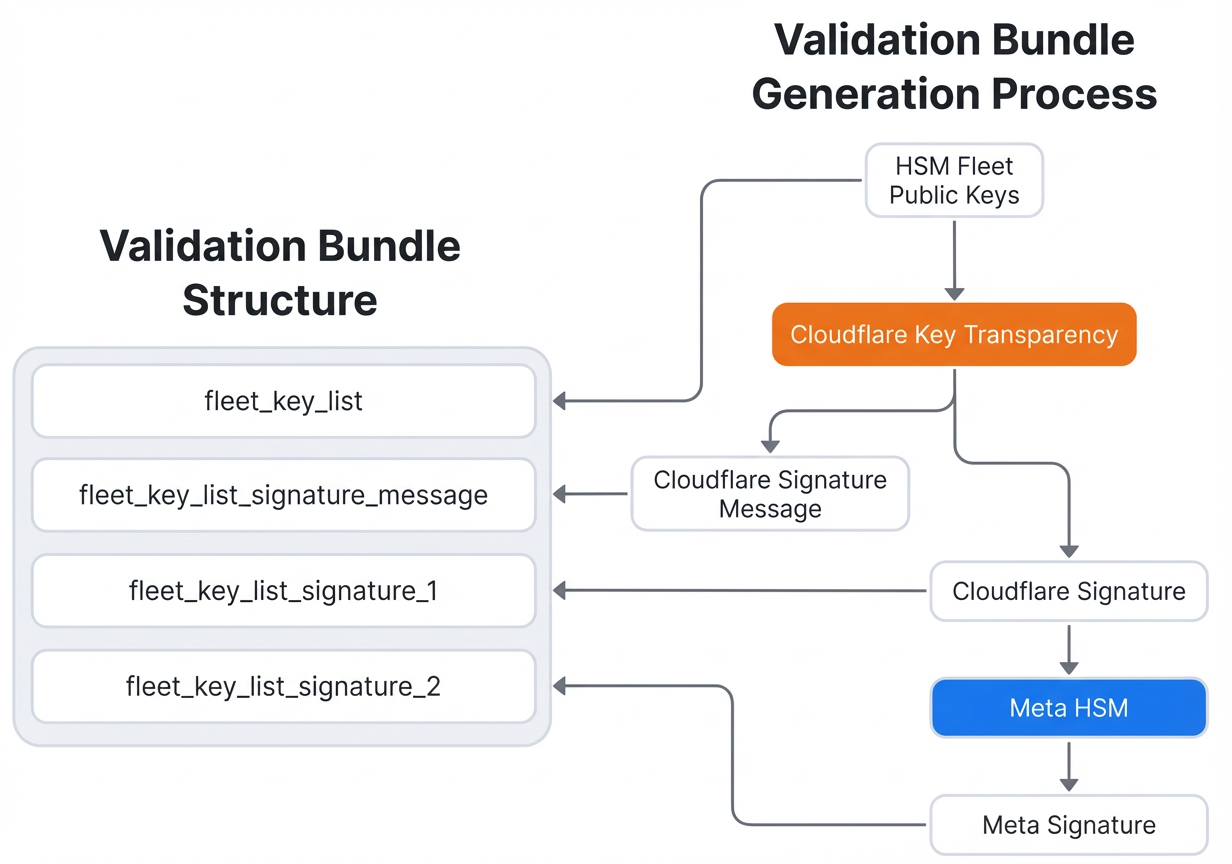
Previously, WhatsApp clients had fleet public keys hardcoded into the app. For Messenger, Meta built a new system to distribute these keys over the air without requiring an app update. The keys are delivered in a validation bundle signed by Cloudflare and countersigned by Meta.
“Cloudflare maintains an independent audit log of every bundle,” said a Cloudflare spokesperson. “This provides cryptographic proof that the keys are authentic and haven’t been tampered with.”
The full protocol is detailed in Meta’s whitepaper, Security of End-To-End Encrypted Backups.
More Transparent Fleet Deployment
Meta will now publish evidence of the secure deployment of each new HSM fleet on its blog. These deployments are infrequent—every few years—but the company commits to full transparency so users can verify the system operates as designed.
“This demonstrates that Meta cannot access encrypted backups,” a company representative stated. “Anyone can follow the audit steps in our whitepaper to verify each fleet.”
What This Means
For everyday users, these updates mean their message history remains truly private, even from Meta. The new over-the-air key distribution makes it easier for Messenger to deploy secure backup infrastructure without interrupting users with app updates.
The transparency commitment sets a new industry standard for encrypted backup security. “Meta is leading the way in showing that encryption can be both robust and verifiable,” said a cybersecurity expert at the Electronic Frontier Foundation.
Encrypted backups protect against data breaches, government access requests, and accidental exposure. With these changes, users of WhatsApp and Messenger can be confident their conversations stay between them and their intended recipients—not Meta.
For developers and security researchers, the published evidence and audit guidelines offer a reference model. Meta encourages the community to examine the whitepaper and validate the deployments independently.
Read the full whitepaper: Security of End-To-End Encrypted Backups.
Related Articles
- Cybersecurity Insiders Sentenced to Four Years for Role in BlackCat Ransomware Attacks
- Critical Linux Kernel Bug Enables Arbitrary Page Cache Writes via AEAD Sockets
- Active Exploitation of Critical Ivanti Flaw, Major Data Breaches, and Novel AI Threats Highlight This Week's Cybersecurity Landscape
- Securing Your .NET Applications: A Guide to the 10.0.7 Out-of-Band Data Protection Update
- Global Telecom Espionage Campaign Disrupted: Google and Mandiant Take Down GRIDTIDE Backdoor
- Security Alert: Major Breaches, Encryption Battle, and Flaws Rock Tech Industry
- Widespread Linux Kernel Crypto Flaw Grants Instant Root Access to Local Attackers
- How to Defend Against Hypersonic Supply Chain Attacks Without Knowing the Payload