Why NASA's Science Missions Are Declining Despite a Boom in Rocket Launches
In an era of unprecedented access to space, thanks to commercial rockets like SpaceX's Falcon 9, you might expect NASA to be launching more science missions than ever. Yet the reality is quite the opposite: the space agency is sending up fewer telescopes and planetary probes than it did 25 years ago. What's behind this paradox? Let's dive into the key questions surrounding NASA's science strategy, budget constraints, and shifting priorities.
Why is NASA launching fewer scientific missions despite having more rocket options?
The apparent contradiction stems from a complex mix of factors. While the commercial space industry has slashed launch costs and increased frequency—thanks largely to reusable boosters—the supply of ready-to-fly science payloads hasn't kept pace. Developing a major NASA science mission, like a flagship telescope or interplanetary probe, can take a decade or more from conception to launch. The agency's pipeline is full of ambitious, expensive projects that consume budget years in advance. Meanwhile, the rapid cadence of commercial launches doesn't automatically translate into more NASA science flights. The agency must carefully select missions based on scientific merit, feasibility, and cost, and it often opts for fewer, higher-impact missions over many small ones. Additionally, policy shifts and administrative priorities can redirect focus away from science toward human spaceflight, as seen with the current administration's emphasis on the Moon.

How does NASA's current science budget compare to its funding in 2000?
Adjusted for inflation, NASA's science budget is roughly the same today as it was in the year 2000—about $7.25 billion annually. This plateau may seem surprising given the agency's high-profile achievements and the growing importance of space research. However, the number does not account for the rising costs of modern missions, which often require cutting-edge technology, longer development timelines, and more extensive testing. In effect, the same budget buys fewer missions now because each one is costlier. The stability of the budget also masks a political battle: the Trump administration repeatedly attempted to slash NASA science funding, but Congress restored most of the cuts. So while the total hasn't dropped dramatically, it hasn't grown to match the new opportunities or inflation-adjusted needs.
What role did the Trump administration play in NASA science funding?
The Trump administration proposed significant reductions to NASA's science budget each year, targeting earth science, astrophysics, and planetary exploration. For fiscal year 2020, it suggested cutting the science account by roughly 5%, and in later years proposed even deeper cuts—sometimes exceeding 10%—to redirect funds toward human spaceflight programs like Artemis. However, the bipartisan Congress repeatedly rejected these proposals, restoring funding to near previous levels. This tug-of-war created an environment of uncertainty, making it harder for scientists to plan long-term missions. Despite the administration's efforts, the science budget remained essentially flat, but the constant threat of cuts forced NASA to prioritize conservative, proven approaches rather than pursuing more innovative or frequent launches.
What is NASA Administrator Jared Isaacman's primary focus since taking office?
Since becoming NASA Administrator in December, Jared Isaacman has prioritized human spaceflight and lunar exploration over science missions. This focus aligns with the agency's recent success: the Artemis II mission carried four astronauts around the Moon just last month, a major milestone. Isaacman has been clear that his vision centers on establishing a permanent human presence on the Moon. He announced a restructuring of the Artemis program, canceling plans for a lunar orbital space station (the Gateway) and instead pushing for direct construction of a base on the lunar surface. This shift in priorities inevitably draws resources and attention away from the science directorate, which has historically competed for the same budget. Isaacman's background as a commercial astronaut and entrepreneur may also influence his preference for tangible, crewed achievements over robotic science.
What changes has Isaacman made to the Artemis program?
One of Administrator Isaacman's first major actions was to overhaul the Artemis program architecture. He canceled the Lunar Gateway—a space station planned for orbit around the Moon—and replaced it with a more direct approach: building a base on the lunar surface. This decision streamlines the program by eliminating an intermediate step, potentially reducing costs and complexity. The base would serve as a hub for crewed missions, resource extraction, and long-duration stays. Critics argue that the Gateway had scientific value as a staging point for deep-space research, but Isaacman's team believes surface operations offer more practical benefits. The change also signals a stronger commitment to the Moon as a stepping stone for Mars missions. However, this shift has implications for international partners who had invested in the Gateway concept and for the science community that hoped to use the station for experiments.
How does the current situation contrast with the early 2000s?
In the early 2000s, NASA launched a greater number of science missions, including the Mars rovers Spirit and Opportunity, the Cassini probe to Saturn, and a series of Earth-observing satellites. The budget was similar in size when adjusted for inflation, but the cost per mission was lower. Technological advances have since made spacecraft more sophisticated but also more expensive to develop and test. Moreover, the agency faced fewer competing demands from human spaceflight programs. Today, the Artemis program consumes a substantial portion of NASA's overall budget, and the focus on returning astronauts to the Moon leaves less flexibility for science. The commercial launch boom hasn't changed this equation because NASA's bottleneck is not launch availability but the funding and personnel to build payloads. The result is a slower cadence of new science missions, even though the rockets to carry them are plentiful.
What does NASA's science chief want to change about spacecraft procurement?
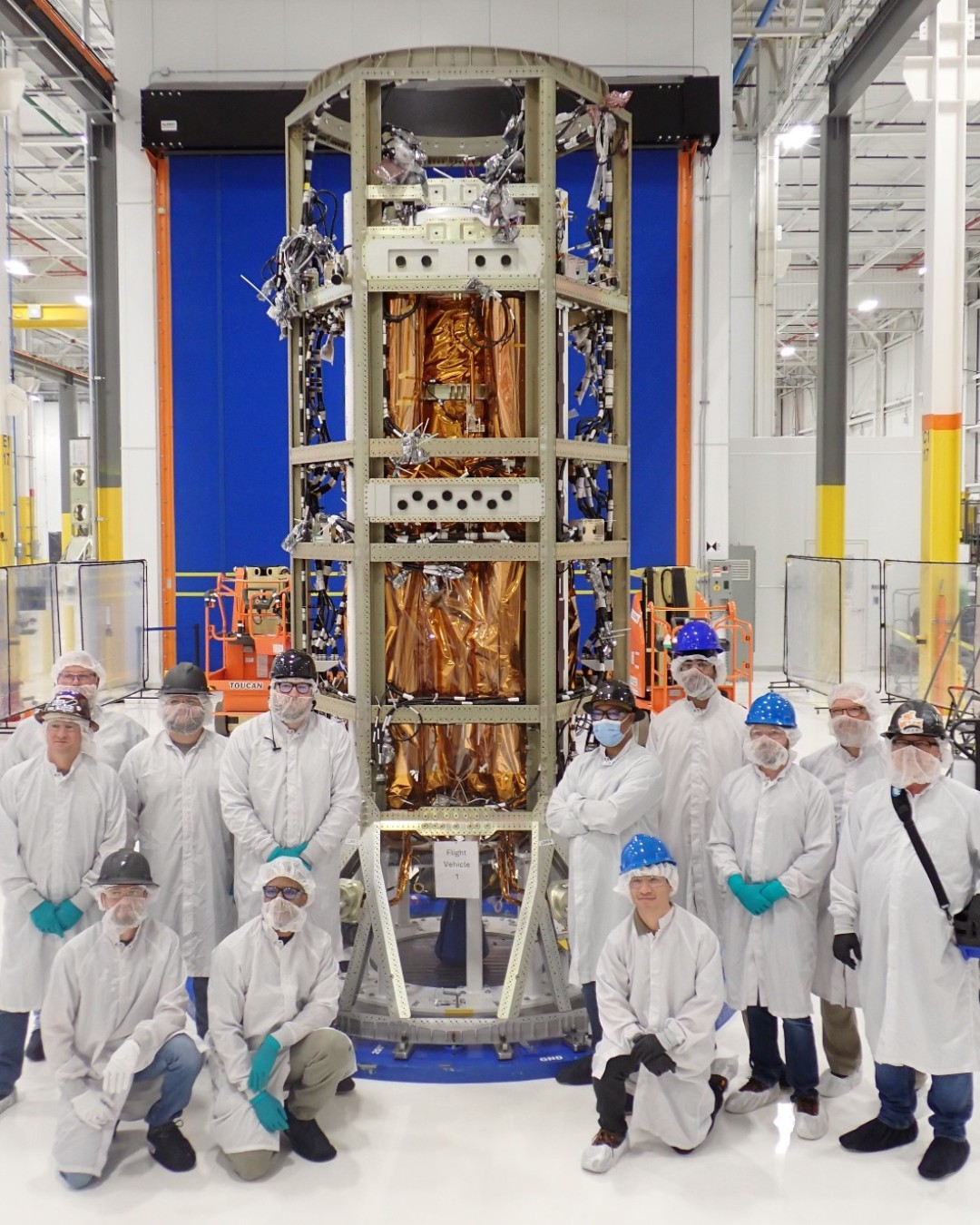
NASA's science chief has expressed a desire to move away from custom-built, one-off satellites toward mass-produced designs. He famously said, "I'll buy 10 of those" when shown a concept for a standardized spacecraft bus. The idea is to leverage commercial production lines to reduce costs and accelerate deployment. Instead of spending years designing a unique satellite for each mission, NASA could order multiple copies of a proven platform, equipping them with different instruments. This approach has been successful in other sectors, such as communications satellites and the military's small satellite constellations. Adopting mass production could allow NASA to launch many more science missions for the same budget, potentially reversing the decline in launch rates. However, it requires a cultural shift within the agency and the scientific community, which prizes tailored, high-performance instruments over the reliability and economy of standardized components.
Related Articles
- A Step-by-Step Guide to Demystifying Particle Physics Fields
- How to Maximize Your Savings on the Latest Tech: Pixel 10, Hisense TVs, and Star Wars Deals
- JPL Engineers Unveil Rotorcraft Breakthrough for Heavier, Longer Mars Missions
- The Delicate Balance: How the Universe's Constants Enable Life
- A 4-Month-Old AI Startup Secures $650 Million to Accelerate Self-Improving Systems
- NASA Seeks Industry Partners for Mars Communication Network
- 5 Key Insights into the Devastating Landslides from Cyclone Maila in Papua New Guinea
- Quantum Leap: Computing with Hybrid Light-Matter Particles