Simulation-First Revolution: Manufacturing Enters New Era of AI-Driven Production
Breaking: Manufacturing’s Simulation-First Era Arrives
Manufacturing is undergoing a seismic shift as high-fidelity simulation, powered by OpenUSD and NVIDIA Omniverse, replaces the traditional design-build-test cycle. Industry leaders report that synthetic training data is now accurate enough for production-grade AI, enabling perception systems, reasoning models, and autonomous workflows in live factory environments.
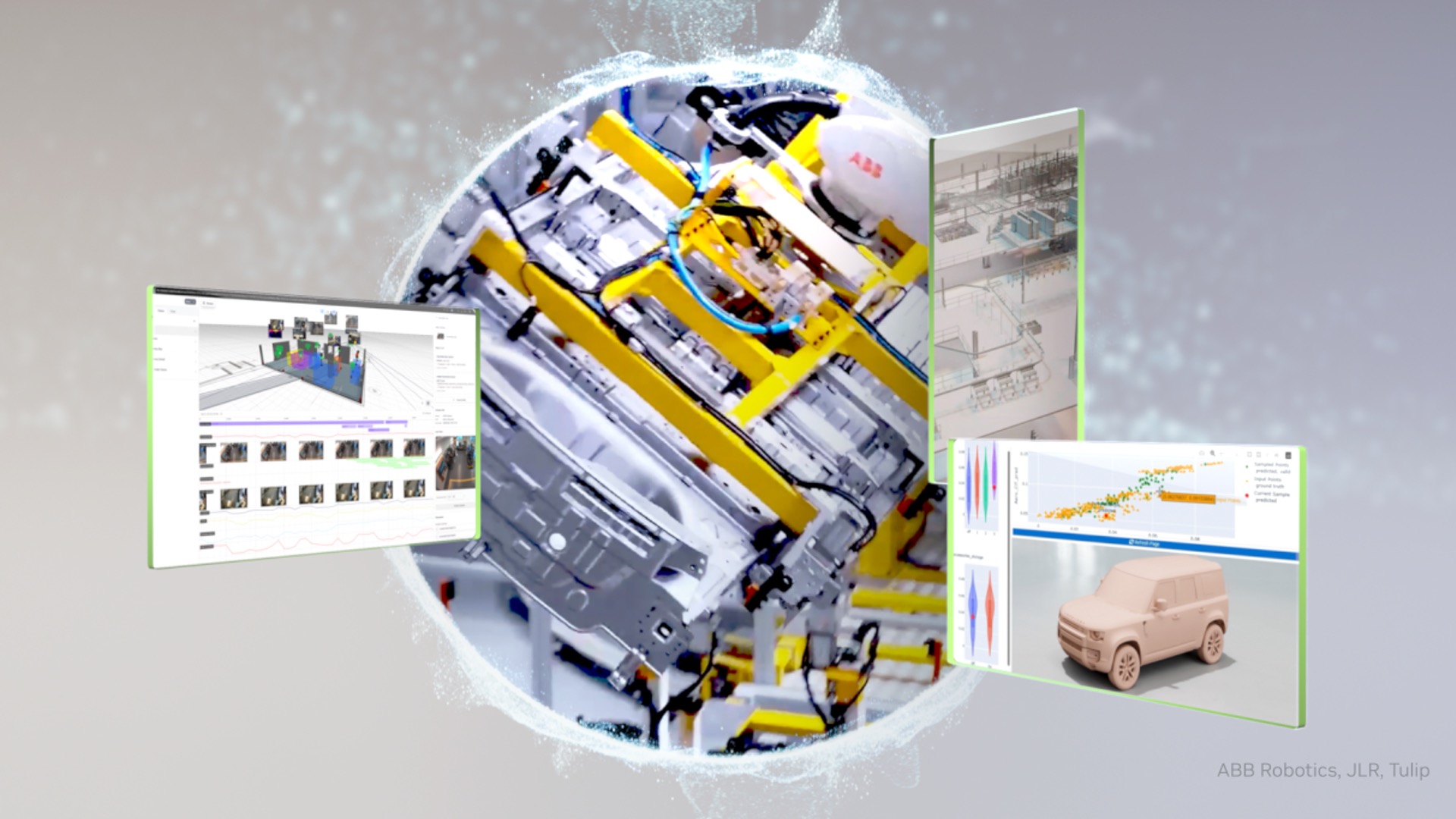
“We’ve vertically integrated the technology stack and optimized it to the point of achieving 99% accuracy on simulated versions,” said Craig McDonnell, managing director of business line industries at ABB Robotics. This breakthrough allows robots to be trained and validated before a production line exists.
Background: The Broken Pipeline
For decades, manufacturers relied on real-world testing as the only reliable environment. Assets moved poorly between 3D pipelines, losing physics properties, geometry, and metadata at every transfer.
The SimReady content standard, built on OpenUSD, now defines what physically accurate 3D assets must contain to work reliably across rendering, simulation, and AI training. This eliminates the need to rebuild from scratch, accelerating the path to deployment.
How Manufacturers Are Adopting
ABB Robotics Closes the Sim-to-Real Gap
ABB integrated NVIDIA Omniverse into RobotStudio HyperReality, used by over 60,000 engineers. Robot stations are represented as USD files running identical firmware to physical counterparts.
The result: synthetic training variations—lighting, geometry—generated at scale. Downstream outcomes include a 50% reduction in product introduction cycles, up to 80% reduction in commissioning time, and a 30–40% reduction in total equipment lifecycle costs.
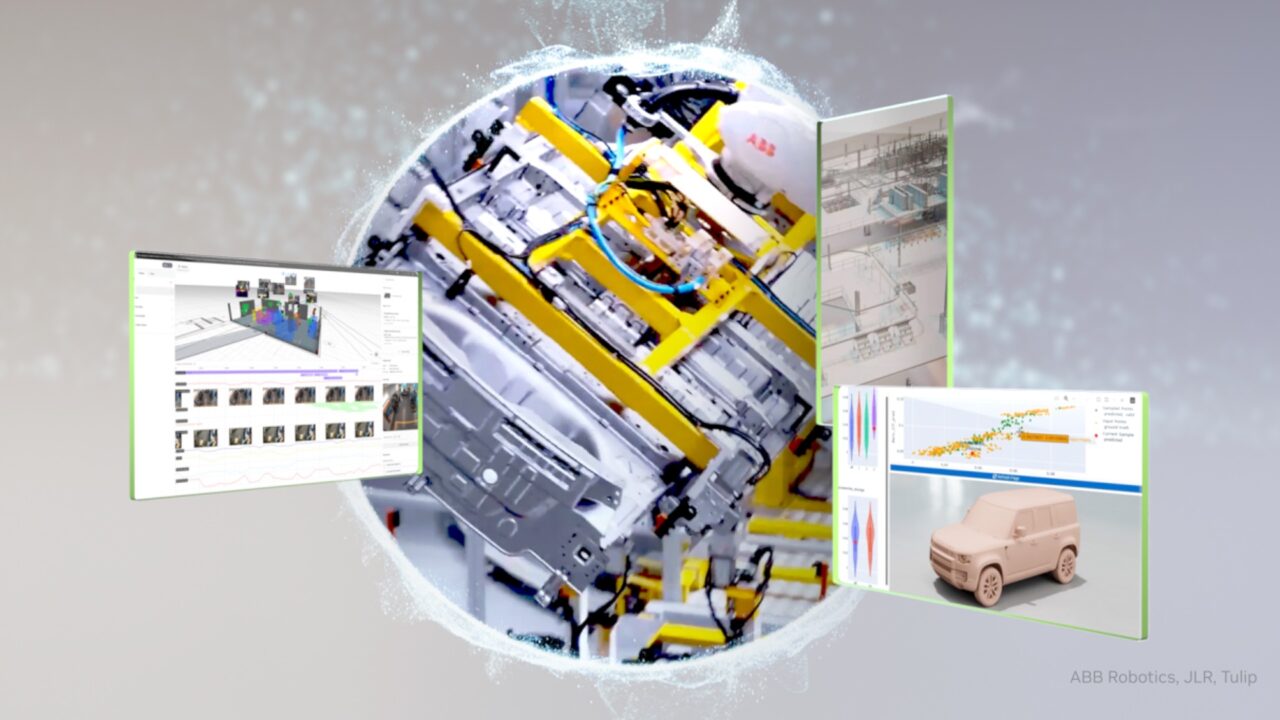
JLR Compresses Simulations by 240x
JLR trained neural surrogate models on over 20,000 wind-tunnel-correlated CFD simulations, compressing four hours of aerodynamic simulation to one minute. 95% of aero-thermal workloads now run on NVIDIA Omniverse.
“This simulation-first approach is transforming how we design and validate vehicles,” a JLR spokesperson stated. The speed gain allows engineers to explore vastly more design iterations.
What This Means for Manufacturers
The era of build-test-fix is ending. With simulation-first workflows, companies can validate AI models, test part tolerances, and optimize production lines entirely in software before committing physical resources.
Experts note that OpenUSD as a connective standard is central to this shift. It enables a unified digital twin pipeline where assets and AI models flow seamlessly across tools.
“The implications are profound—faster time-to-market, lower costs, and the ability to simulate edge cases that are too dangerous or expensive to reproduce physically,” said an NVIDIA industry analyst.
Related Articles
- Wind Turbine Blade Failure Analysis and Prevention: A Step-by-Step Guide to Lightning Strike Damage
- How to Access and Watch All FOSDEM 2026 Videos: A Complete Guide
- Trustworthy AI Agents: How NVIDIA and SAP Are Securing Enterprise Automation
- How to Create and Implement Effective Design Principles: A Step-by-Step Guide
- The Latest on FISA Section 702: A 45-Day Extension and Lingering Reform Debates
- Tackling Air Pollution and Heat: Tailored Green Solutions for Cities in Nepal, Ethiopia, and Malawi
- 7 Key Insights Into Local-First Web Development
- Mastering iMovie: A Complete Guide to Video Editing on iPhone and iPad