May 'Micromoon' to Appear Unusually Small Tonight; Rare Blue Moon Coming Later This Month
Breaking: May's Full Moon Rises as a 'Micromoon' — Smallest of the Year
Tonight's full moon — rising shortly after sunset on May 1 — will be a micromoon, appearing about 14% smaller and 30% dimmer than a typical full moon, according to NASA data. This is the smallest full moon of 2025, occurring when the moon reaches apogee, its farthest point from Earth in its elliptical orbit.
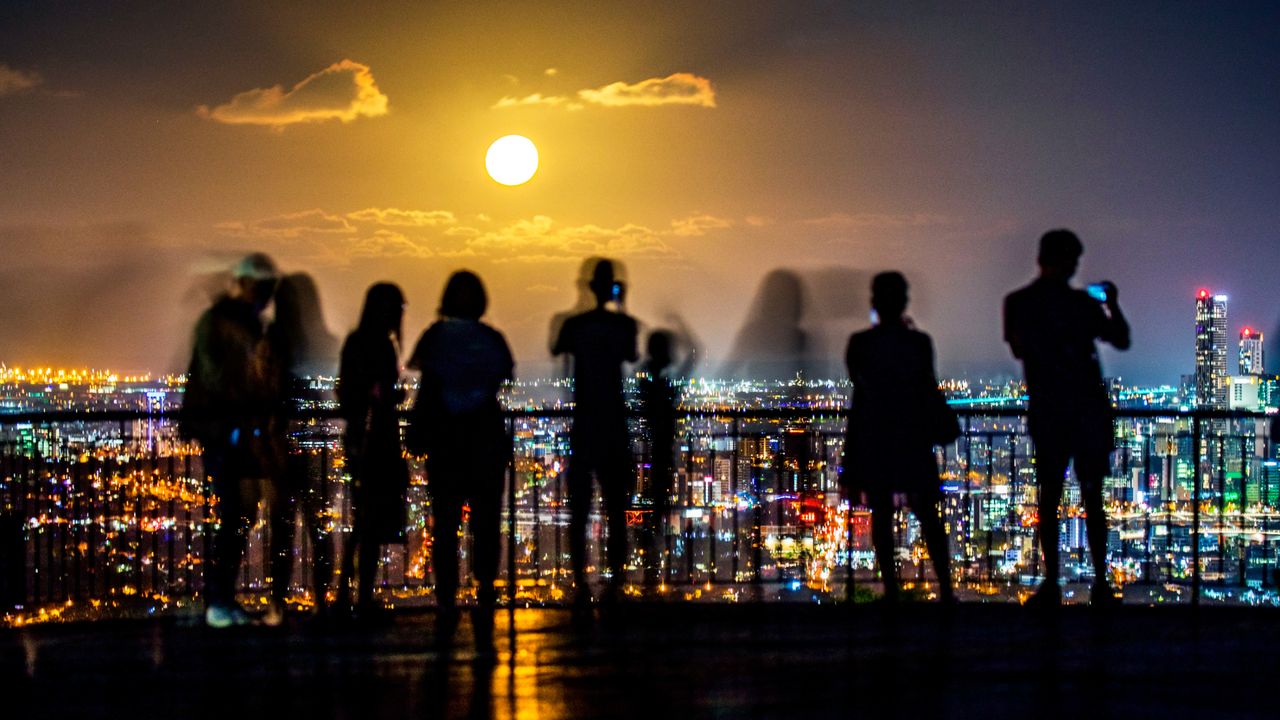
"A micromoon is the opposite of a supermoon," explains Dr. Elena Torres, an astrophysicist at the Griffith Observatory. "While a supermoon looks oversized and brighter, a micromoon appears noticeably smaller and less luminous, though still a stunning sight for skywatchers."
The event coincides with May Day, adding a celestial twist to the traditional spring holiday. Moonrise occurs just after sunset, offering a brief window for optimal viewing as the moon ascends above the horizon.
Background: What Makes This Moon 'Micro'?
The moon's orbit is not a perfect circle; it varies by about 50,000 kilometers between perigee (closest approach) and apogee (farthest distance). A micromoon happens when a full moon coincides with apogee, making it appear smaller than average.
Tonight's full moon is also called the Flower Moon, a traditional name for May's full moon in the Northern Hemisphere, referencing the spring bloom. But its diminished size is the key astronomical highlight.
Rare Double: A Blue Moon Follows Later This Month
Adding to the excitement, a second full moon will occur on May 31 — just 30 days after tonight's event. This second full moon in a single calendar month is known as a Blue Moon, a rarity that happens only once every two to three years.
"Having a micromoon followed by a Blue Moon in the same month is a fascinating coincidence," notes Dr. Torres. "It reminds us of the dynamic nature of our lunar calendar. The Blue Moon will be a normal-sized full moon, not a supermoon, but its rarity makes it a must-see."
What This Means for Skywatchers
For casual observers, tonight's micromoon might not appear dramatically different without a side-by-side comparison, but using a telescope or binoculars can reveal subtle differences in its smaller disk. The best viewing is just after moonrise when the moon is low on the horizon—an optical illusion called the "moon illusion" can make it look larger to the naked eye.
Looking ahead, the Blue Moon on May 31 will rise around sunset and be visible all night. It is a perfect opportunity for night photography and public stargazing events. While not physically blue in color, the term "Blue Moon" has cultural and astronomical significance.
Skywatchers are advised to check local moonrise times and find a location with a clear view of the eastern horizon. Clear skies are forecast for most of the United States and Europe, though weather can always change.
In summary: Tonight's micromoon is the smallest full moon of the year, and the rare Blue Moon later this month makes May 2025 a standout month for lunar enthusiasts. Don't miss either event.
Related Articles
- Global Night Light Patterns Reveal Booms, Busts, and Blackouts: NASA Study
- Exclusive: Samsung S26 Ultra Display Fails Brightness Test, Expert Reveals
- Inside Earth's Invisible Shield: NASA's STORIE Mission Unravels the Mysteries of the Ring Current
- Breaking the Memory Barrier: State-Space Models for Long-Context Video Prediction
- The Hidden Costs of AI: From Deepfake Porn to Leaked Numbers and Electric Trucking
- Three Unsettling AI Challenges: Deepfakes, Privacy Leaks, and Electric Truck Hype
- Geomagnetic Storm Threatens $40 Billion Loss for Satellite Industry; Tiny Startup Races to Improve Forecasts
- The Financial Web: How Tesla Gained $573 Million from SpaceX and xAI in 2025